 Login
Login
Author: Bonnie Kluthe, VP Business Development, First Acre Insurance

After more than 40 years in agricultural insurance and a lifetime on the farm, I know farmers have always managed risk. What feels different now is how quickly one risk can become another—and how little room there is between “not enough” and “too much,” especially when it comes to water.
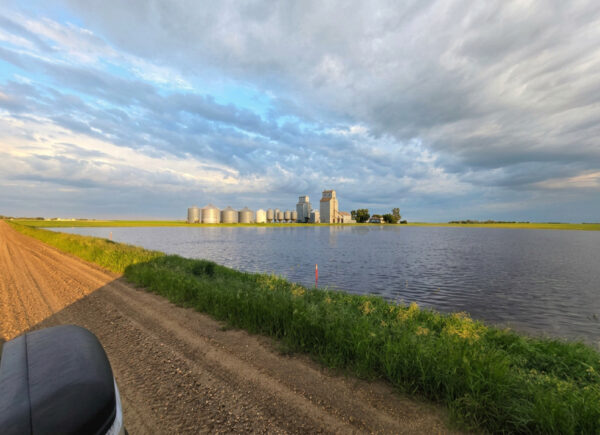
I’m seeing that uncertainty firsthand on our farm in Alberta. For years, our area has been dry, with little rain and very little snow. Then winter 2025/26 brought significant snow, followed by rain that has been monumental: roughly 14 inches in the last two and a half weeks. Some local totals are even being compared with records dating back to 1914. In our own family, we have dealt with basement flooding, lost acres, and fields where canola is suffering while cereals are doing somewhat better. It feels like there is no medium anymore. It is all or nothing.
Those swings create stress that reaches far beyond yield. Too much water can drown out low spots, damage yards and roads, delay spraying, and leave producers wondering whether an application window has already passed. Too little water brings crop stress, lower yield potential, and added pressure in already tight-margin years. And when the season flips from one extreme to the other, the decisions get harder.
This year, some of our crops still have not received herbicide because we simply have not been able to get across the fields. We are also weighing whether it is worth spraying canola for fungicide, knowing the crop is already under water stress and disease pressure may be rising. These are not theoretical conversations. They are real decisions made with limited time, changing conditions, and more questions than answers.
Water is no longer just a field issue. It is a full-operation risk. It can affect stored crops, drainage, access, equipment movement, input timing, family homes, and the financial resilience of the farm. It also affects the mental load producers carry when they are trying to protect a crop, manage cash flow, and make the next right decision.
That is why insurance conversations need to keep pace with how farms operate today. Coverage that worked five or ten years ago may not reflect current infrastructure values, expanded acres, greater storage exposure, or regional water patterns that are becoming more volatile. Producers and brokers need to look at where water can interrupt planting, damage assets, affect stored crops, create access issues, or expose gaps during peak-value periods.
The broader environment adds another layer. Canadian agriculture is also facing geopolitical uncertainty, including questions around CUSMA and future trade stability. When market access, input costs, and weather are all uncertain at the same time, producers need fewer unknowns—not more. Insurance cannot control the weather or trade policy, but it can help create a clearer plan for protecting the operation.
A practical review starts with simple but important questions: Does the policy reflect the farm as it exists today? Are bins, equipment, yards, drainage, roads, and storage values up to date? Are peak exposures accounted for? Are water-related risks being considered based on the region, not a generic view of farm risk?
That is where First Acre is designed to help. We believe insurance should evolve alongside the farm, with coverage shaped by each operation, region, and risk profile—not placed and left unchanged. Through trusted agricultural brokers, producers can access practical guidance and modern farm coverage, including one inclusive policy for personal, agricultural, and commercial assets, real-time machinery valuations, and endorsements that make a difference when conditions change.
Farmers are resilient. But resilience does not mean doing it alone or standing still as risks change. It means asking better questions, reviewing protection regularly, and making sure coverage keeps pace with today’s reality.
Whether there is too much water or too little, the goal is the same: helping producers regain confidence, keep the operation strong, and be ready for whatever comes next.
 Get Started